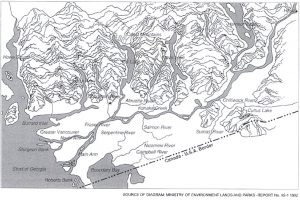
 The Coquitlam River watershed was shaped by forces of glaciation 10,000 to 14,000 years ago and is a typical watershed in the region. The Lower Coquitlam River watershed, below the Coquitlam Lake Dam, includes at least 30 watercourses. The two largest tributaries of the Coquitlam River are Or Creek with a catchment area of approximately 22 sq km and the Hoy/Scott/Pinnacle Creek catchment area totaling n approximately 17.5 sq km.
Human activity has significantly impacted the Coquitlam River over the last century starting with:

Coquitlam River Dam c1913
- The erection of the dams firstly for water supply in 1904
- Power generation in 1914 for the growing communities on the Lower Mainland.
Dam construction for power generation in 1913 did not include fish passage. As a result, anadromous species, including Pacific salmon, were cut off from spawning and rearing in the upper part of the river. In 2005, upstream and downstream fish passage was provided to Sockeye that were previously isolated in the reservoir, enabling marine migration once again. Remaining salmon populations have faced additional stressors over the last century due to industrial activities and urban development, altering the natural characteristics of the lower watershed. For example, a substantial portion of the watershed’s drainage is redirected via stormwater management systems, which eventually empty directly into open watercourses.
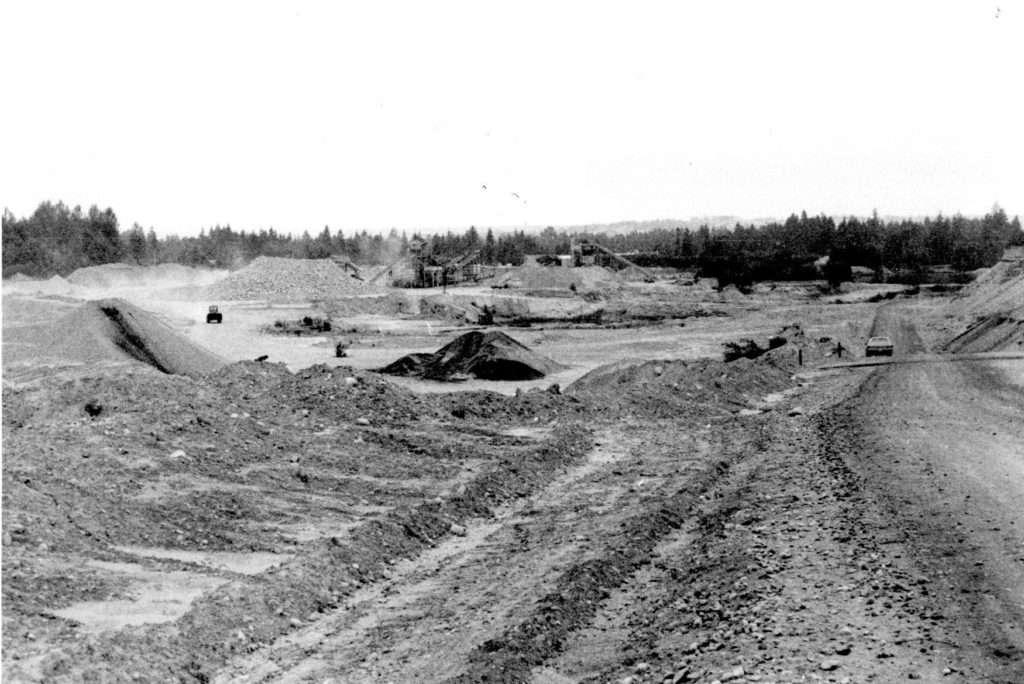
1970’s Lafarge gravel pit in Coquitlam (image credit: coquitlam.ca)
During the 1950’s, gravel extraction began both in and along the Coquitlam River. Until the mid 1960’s it was common practice for industry and government agencies to remove gravel directly from the river which destroyed pink and chum spawning beds. This was finally prohibited in 1965 when the B.C. Gravel Removal Order came into effect.
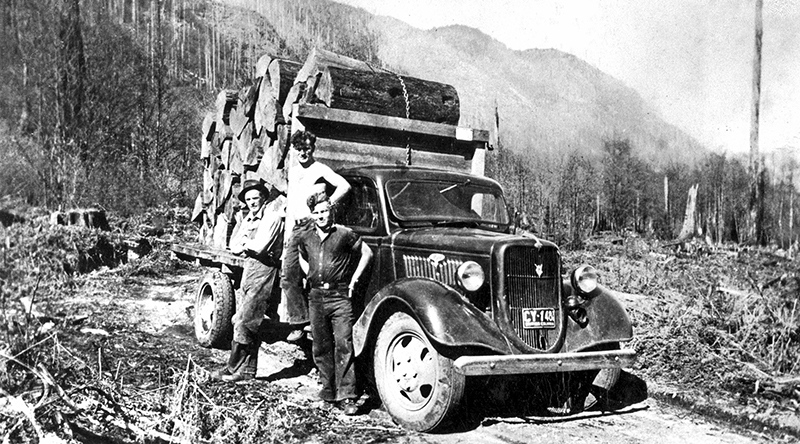
McCrary Brothers Logging hauling 50-inch cedar shingle bolts from Burke Mountian in 1937. – City of Coquitlam Archives (COQ C6.511)
Commercial logging was active for most of the 1900s. During heavy precipitation events, unstable river banks can offload sediment from Or Creek to the Coquitlam River. While logging was a less significant impact to the river than were other mentioned activities, these pulse sediment loads are largely attributed to historical logging practices.
Despite these major impacts, the fish stocks have managed to persevere and are showing some signs of improvement. Improved logging and mining practices, urban planning and environmental stewardship are contributing to a healthier urban river. Of particular note is the limited return of sockeye salmon to the Coquitlam River for the first time in 100 years.
This success is the result of a joint initiative by the Kwikwetlem First Nation, Department of Fisheries and Oceans (DFO), Metro Vancouver, BC Hydro, and stewardship groups. Further work is ongoing to re-establish sockeye runs and facilitating fish passage over the dam.
The Coquitlam River watershed is part of the traditional territory of the Kwikwetlem First Nation. The Kwikwetlem First Nation members live on the Coquitlam River and are working hard to restore their culture, traditions and livelihood, all of which depend on a healthy Coquitlam River.

